
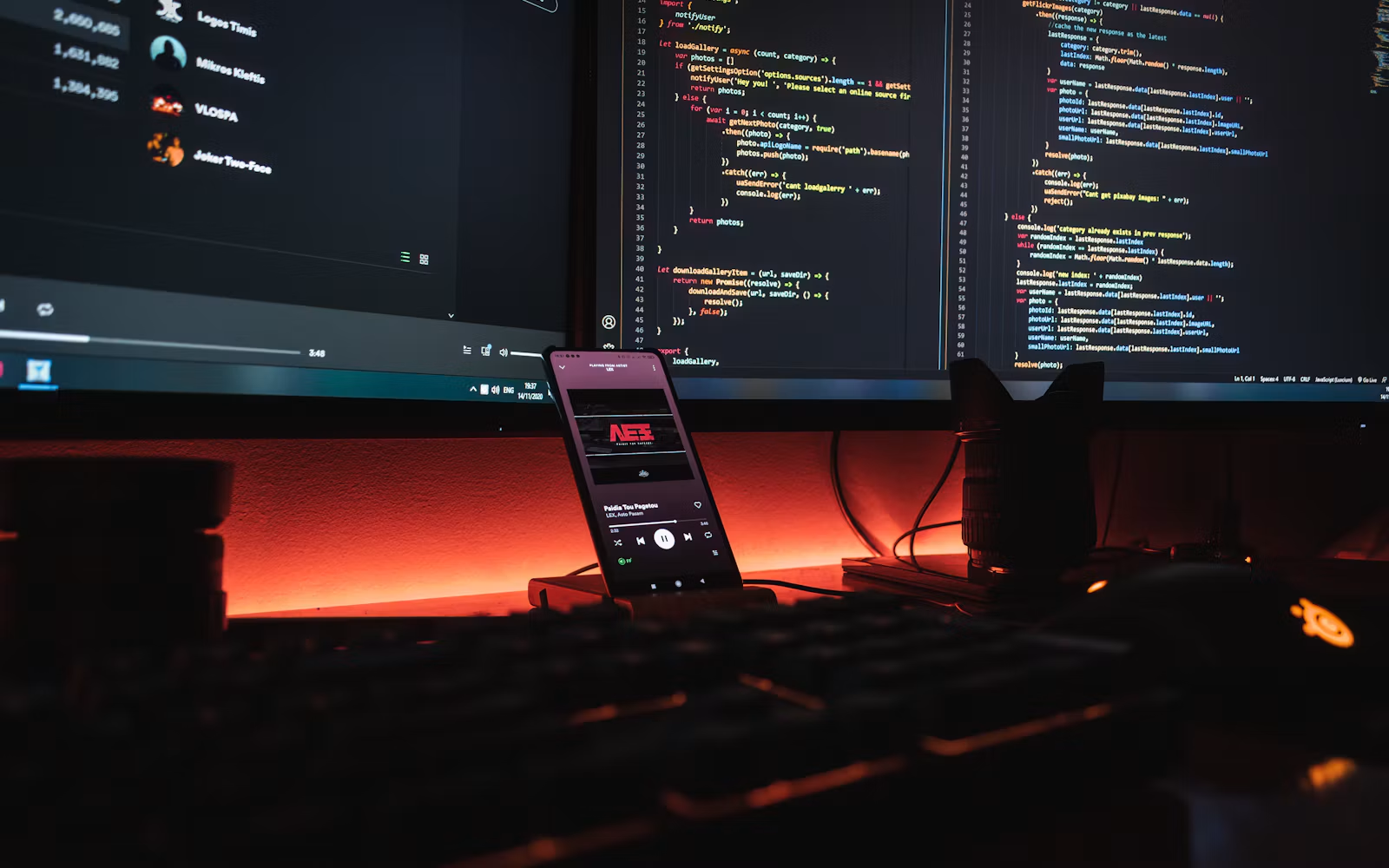
It is two in the morning and a developer is stuck on a bug. She opens Cursor, highlights the failing test and types a sentence: find out why this breaks on the second run, and fix it. The model that reads her code, Grok 4.7, was trained on Colossus, a supercomputer in Memphis built by a company that also launches rockets, lands them on ships and runs the world's largest satellite network.
Since August 2026 the code editor, the model and the rockets belong to the same company. It is one of the strangest and most ambitious combinations in technology, and it says a lot about where artificial intelligence is heading.
How a rocket company ended up owning a code editor#
The story starts with compute. On February 2, 2026, SpaceX acquired xAI, the AI company Elon Musk founded in 2023, in an all-stock deal that valued the combined company at about $1.25 trillion, according to Bloomberg. In a memo to staff, Musk argued that progress in AI depends on huge data centers on the ground that need immense amounts of power and cooling, and that space would one day offer a better home for them.
The AI business has changed its name twice since. In July 2026 xAI became SpaceXAI. In October it took the name SpaceXSI, for SpaceX Super Intelligence, in line with the term the US government adopted that autumn. SpaceX's financial filings now report a Super Intelligence segment, and in the third quarter of 2026 it brought in $7.56 billion of revenue on its own. In June, SpaceX had gone public on Nasdaq in a record-setting offering that raised $75 billion.
Cursor came next. In April 2026 the two companies announced a partnership that gave SpaceX the option to buy Cursor for $60 billion later in the year. Cursor wrote that it had been held back by a shortage of compute and would use Colossus to scale up its own models dramatically. SpaceX exercised the option in June, and the deal closed on August 14. In the seven weeks between the closing and the end of September, Cursor brought in $608 million of revenue.
Cursor, the editor that taught developers to talk to code#
Cursor is made by Anysphere, a startup founded by four MIT graduates. It looks like a familiar code editor, and in a sense it is: it is built on the same open-source foundation as Microsoft's Visual Studio Code, so developers can bring their settings and extensions with them. What changed is that AI runs through everything.
As a developer types, Cursor predicts the next edit, often several lines away. Ask it a question and it answers with the whole codebase in view. Give its agent a task and it plans the change, edits files across the project, runs commands and tests, and shows the result for review. Background agents keep working in the cloud while the developer does something else, and an AI reviewer checks pull requests for bugs before a human looks at them.
The scale is remarkable for a product that is only a few years old. Cursor says it is used at more than half of the Fortune 500 and by more than 50,000 businesses, and that it writes more than 100 million lines of enterprise code a day. Bloomberg reported in May 2026 that its annualized revenue had passed $3 billion.
Grok, from chatbot to coding partner#
Grok started in 2023 as a chatbot with a sense of humor, built into X. It has grown into a family of frontier models and one of the most used AI assistants in the world, with about 117 million monthly users in March 2026, according to figures from SpaceX's listing documents.
Coding became a focus early. Grok Code Fast 1, released in August 2025, was a fast and inexpensive model designed for exactly the kind of quick, repeated steps that coding agents take, and it launched free in Cursor for its first week. The real turning point came with Grok 4.5 in July 2026, a model Cursor and SpaceXAI trained together on trillions of tokens of real coding work from Cursor. Grok 4.6 followed in August, and Grok 4.7, now the model Cursor picks by default, reads up to 256,000 tokens of code at once, with a long-context option of 500,000.
The joint models are priced for heavy use. Grok 4.5 costs $2 per million tokens of input and $6 per million tokens of output through the API, a fraction of what many frontier models charge. Cursor's own Composer models remain available alongside them.
Where the pieces click#
Put the two companies side by side and the logic of the deal becomes clear. Each has something the other needs.
Compute. Training better coding models takes enormous computing power, and SpaceX has one of the largest fleets of AI chips anywhere. SpaceX has described Colossus as a training supercomputer equal to a million of Nvidia's H100 chips, and the company reported 1.7 gigawatts of computing capacity at the end of September 2026, up from 1.4 gigawatts three months earlier, as Colossus II comes online. Cursor called it access to the largest fleet of GPUs in the world.
Data. Cursor sees how developers at tens of thousands of companies actually work: which suggestions they accept, which they reject, which fixes pass the tests. That is exactly the signal a model needs to get better at coding. Grok 4.5 was the first model built on that loop, and every release since has tightened it.
Distribution. Grok reaches hundreds of millions of people through X and its own apps. Cursor reaches the developers who build the world's software. In October 2026 the two came together in the X Subscription, a single plan that covers Grok, the always-on agent Grok Bot, Cursor and X Premium, with one shared pool of usage. Plans run from free to $200 a month, and every paid tier includes at least twice as much coding with Grok models as the comparable Cursor plan did before.
Model choice changed with it. On the new Free and Plus plans, Cursor runs its own models, Grok and Composer. Anthropic's Claude and Google's Gemini remain available on Premium and higher plans, billed at their API prices, and existing subscribers can keep the plans they have. OpenAI's models leave Cursor on November 12, 2026.

Data centers in orbit#
The boldest part of the plan is not on the ground at all. Musk's argument is that AI will soon need more electricity and cooling than the ground can comfortably supply, while space offers constant sunlight and the cold of the void. SpaceX has asked the US Federal Communications Commission for permission to launch up to a million data-center satellites in orbits between 500 and 2,000 kilometers up.
The first design is public. SpaceX's AI1 satellite carries up to 150 kilowatts of computing power on wings that span 70 meters, and a factory in Bastrop, Texas, is set to start building AI satellites by the end of 2027. Getting them up is what Starship is for. On September 28, 2026, Starship's 14th flight became its first to reach orbit, and it deployed 26 of the new, larger Starlink V3 satellites.
Few companies could even attempt this. SpaceX already puts most of the world's new satellites into orbit and operates more of them than everyone else combined. For SpaceXSI, that means the path from a new chip to a working data center could one day run through a launch pad.
The Musk effect#
Few people have shaped the modern AI industry from as many directions as Elon Musk. He co-founded OpenAI in 2015, helping to start the lab that later released ChatGPT, before leaving its board in 2018. A decade later he runs one of its main rivals.
His companies have changed the pace of the race. The first Colossus went from empty factory to working supercomputer in a matter of months, a speed that pushed the rest of the industry to rethink how fast AI infrastructure can be built. Today that capacity is a business in its own right, and other AI labs have reportedly rented time on it.
His influence reaches beyond software. At Tesla, more than 1.7 million cars subscribe to or own its Full Self-Driving software, and its robotaxis had driven about two million miles without a safety driver by the third quarter of 2026. Tesla designs its own AI chips, and Neuralink is working on implants that let people control computers with their thoughts. Even the vocabulary is shifting. The phrase super intelligence, once a term from research papers, now names a business segment in SpaceX's filings.
What it means for the people who write software#
For developers, the result is a vertically integrated stack unlike any other: rockets and satellites, power and chips, a frontier model family, and the editor where the code is written, all inside one company and, increasingly, one subscription. The models get better because the editor shows them how people really code, and the editor gets faster and smarter because the models are trained for it, on hardware built for the job.
Whether you are fixing a bug at two in the morning or planning a migration that will take a year, the pitch is simple: describe what you want and let a model trained on one of the largest computers ever built do the heavy lifting. To see it, download Cursor, choose Grok 4.7 and ask for something ambitious. To follow where it all leads, watch the next Starship launch at spacex.com.
 Ausprobieren