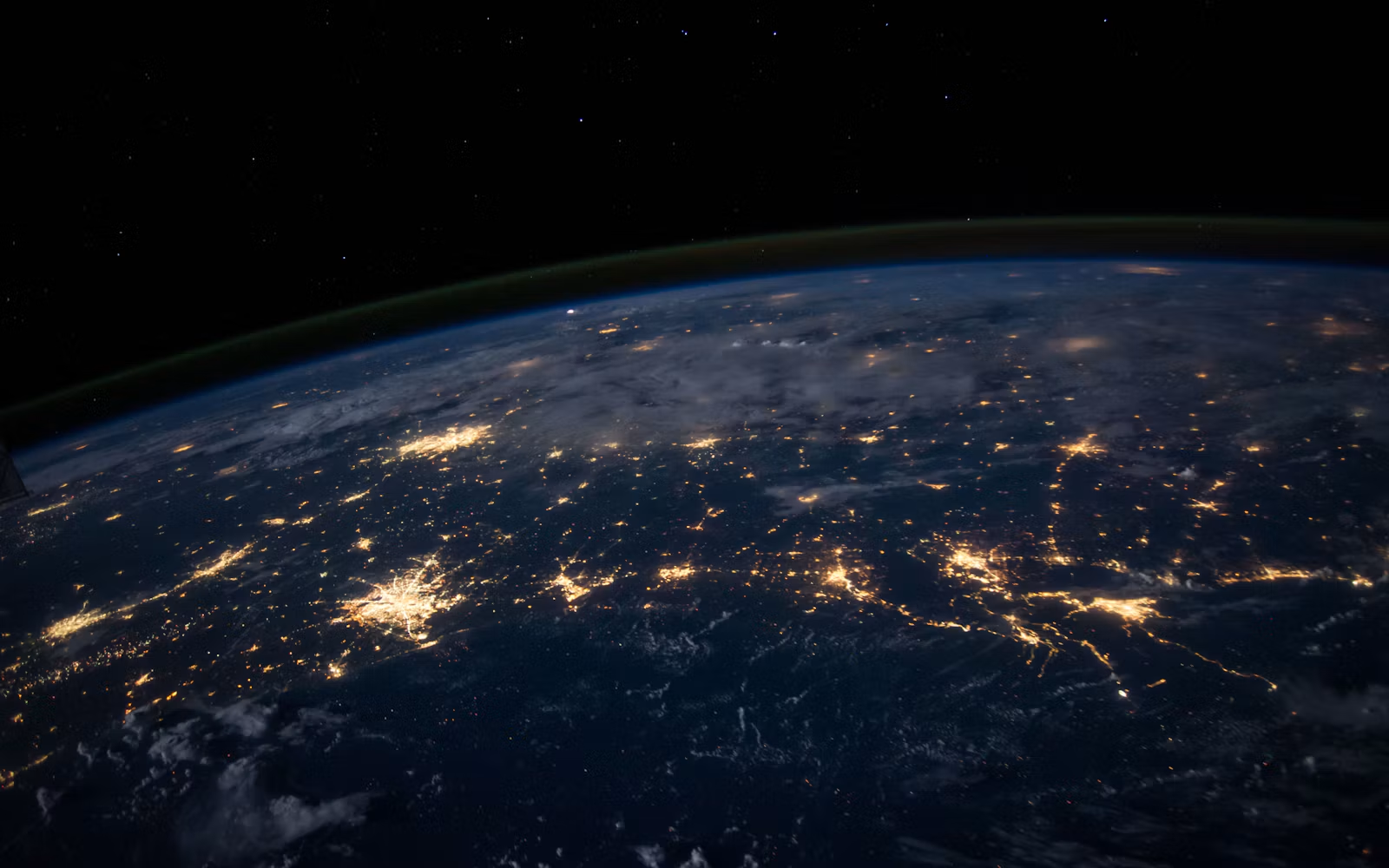
It is late, the house is quiet, and someone with a half-finished idea types one command into a terminal. A few seconds later the idea is live. Not on a single server in a building in Virginia or Frankfurt, but in data centers in more than 335 cities at once, from Reykjavík to Nouméa. A visitor in São Paulo who opens the link is answered by a machine in São Paulo. A visitor in Seoul gets Seoul.
Cloudflare has a phrase for this. Its developer pages say applications deploy to "region: Earth," and it is only half a joke. For most of the web's history, putting software online meant choosing where it would live. Cloudflare's argument is that you should not have to choose.
What makes the company worth a long look is not one clever trick but how much now runs on that single network. The product directory in its developer documentation lists more than a hundred entries. Here are the highlights.
A shield first, a platform second#
Cloudflare launched on stage at the TechCrunch Disrupt conference on September 27, 2010. The first idea was protective. Put a network in front of websites to soak up distributed denial-of-service (DDoS) attacks, the floods of junk traffic that knock sites offline, and keep copies of pages close to visitors so they load faster. That second job has a name: a content delivery network, or CDN.
Sign-ups on launch day came in faster than the tiny team had planned for, and the company still marks the date each year with Birthday Week, a run of launches it describes as gifts back to the internet. A free plan with SSL encryption, a CDN and DDoS protection is a big part of why so many sites sit behind it. Cloudflare's own network page says it powers one in five sites on the internet.
The gifts kept getting bigger. On April 1, 2018, picked for the four ones in the address, the company opened 1.1.1.1, a free public DNS resolver. DNS is the internet's address book: it turns a name like example.com into the numbers computers actually use to find each other, and Cloudflare built 1.1.1.1 around privacy.
The map is the product.#
An edge network puts servers at the edges of the internet, close to where people actually connect, instead of in a handful of giant central facilities. Cloudflare's version spans more than 335 cities in more than 125 countries, with over 13,000 direct interconnections to internet providers, cloud platforms and corporate networks. By the company's count, 95 percent of the world's internet users are within about 50 milliseconds of one of its data centers, which is quicker than a blink.
The network has 534 terabits per second of capacity, and it blocks more than 234 billion cyber threats on a typical day. Those numbers matter less for their size than for one design decision behind them: Cloudflare runs every service in every data center. There is no premium location and no back office in a distant region. A weekend project and a global retailer are served by the same machines, with the same defenses, in the same cities.
Code that lives everywhere at once#
On September 29, 2017, during Birthday Week, Cloudflare introduced Workers. Rather than build a new feature for every customer request, it would make the network itself programmable. At the time the network had servers in 117 locations. Today Workers runs in every city on the map, and the free plan includes 100,000 requests a day.
The engineering trick is the isolate. Instead of booting a virtual machine or a container for each piece of code, Workers runs code in lightweight sandboxes inside V8, the JavaScript engine that powers Chrome. An isolate starts inside an environment that is already running, which removes the "cold start" delay that has long dogged serverless computing.
A whole family has grown around that idea:
- Workflows strings steps together into long-running jobs that retry automatically and can pause for seconds, hours or days while they wait for a webhook or a human approval.
- Containers and Sandboxes, generally available since April 2026, run code in any language and give an AI agent a computer of its own to work in.
- Browser Run, formerly Browser Rendering, drives headless Chrome browsers on the network for testing, screenshots and automation.
- Workers for Platforms lets a software company invite its own customers to upload code, and runs it safely on their behalf.
Somewhere to keep things#
Object storage is a place for files of any size, such as photos, videos, backups and datasets, each one fetched by name rather than stored in folders on a particular disk. Cloudflare's version, R2, is known above all for what it does not charge: egress, the fee many clouds levy every time data leaves them. R2 charges nothing to download your own files, and it speaks the same API as Amazon S3, so existing tools work without a rewrite.
Around it sits a full pantry of storage:
- Workers KV, a key-value store replicated across 335 locations, ideal for settings, feature flags and anything read far more often than it is written.
- D1, a serverless SQL database that speaks SQLite's flavor of SQL, with point-in-time recovery for rewinding mistakes.
- Queues, for handing work off to be done in the background.
- Hyperdrive, which makes a database that lives in one region feel close to users everywhere.
- Basin, formerly Cloudflare Data Platform, for ingesting and querying huge analytics tables kept in R2.
The most unusual of the lot is Durable Objects. Each one is a tiny named computer with its own strongly consistent storage, and any client anywhere can reach a particular object by its name. That makes hard problems simple: one object per chat room, per multiplayer match or per shared document, keeping everyone in sync without a coordination server of your own.
The free allowances, including ten gigabytes a month of R2 storage and five million D1 row reads a day, are enough to build something real before spending anything.

AI, close to the people using it#
Workers AI runs machine learning models on serverless GPUs spread across the network, with a catalog of more than 50 open-source models for jobs like text generation, image classification and object detection. AI Gateway sits in front of AI providers and adds analytics, caching, rate limiting and a fallback to a backup model when one fails. Vectorize stores embeddings, the long lists of numbers that capture what a sentence or image means, so software can find things that are similar rather than identical. AI Search adds natural-language search to an app or agent without building the retrieval machinery from scratch.
The newest layer is for agents. The Agents SDK lets developers build and host AI agents that connect to chat, voice, email, Slack and webhooks, and that keep their own state, schedule their own work and hold live connections open.
Media gets the same treatment. Realtime is a toolkit for live audio and video, including a selective forwarding unit, the relay that passes each participant's stream to everyone else in a call. Stream ingests, encodes, records and plays live and on-demand video. Images resizes, optimizes, stores and delivers pictures.
Security for people, not just websites#
The same network that protects websites now protects the people who work at companies. Cloudflare One is a zero trust platform. The idea is that being inside the office network no longer earns automatic trust: every request is checked against who is asking and from what device. Access puts identity checks in front of internal apps, Gateway filters the web traffic of company devices, and Cloudflare Tunnel connects a private server to the network without a publicly routable address for attackers to find.
Smaller tools show the same instinct. Turnstile verifies that a visitor is human without asking them to solve a picture puzzle, and works on any website, whether or not its traffic runs through Cloudflare. The Registrar sells domains, across more than 430 top-level domains, at the price registries and ICANN charge, with no markup. Since 2014, Project Galileo has given free protection to journalists, human rights defenders and humanitarian groups.
Then there are the lava lamps. A wall of them in the lobby of Cloudflare's San Francisco office is filmed by a camera, and the unpredictable footage feeds a system called LavaRand, an extra source of randomness for the cryptography on the company's servers. Some of the randomness behind Math.random() in Workers comes from those lamps. The idea has spread to rainbow mobiles in Austin, double pendulums in London and, since 2025, a wall of wave machines in Lisbon.
What all that breadth buys#
Put the pieces side by side and the remarkable part is not any single product. It is that compute, storage, databases, AI, video, security and domains share one account, one network and one set of tools, most with a free tier to start on. A few people can now build what once needed a data center and an operations team.
That is why so many startups begin here, and why this kind of breadth matters to anyone with something to build. Somewhere tonight, someone is typing that one command, and their idea is about to land in 335 cities. The network map is worth a look, if only to see where.
 Ausprobieren