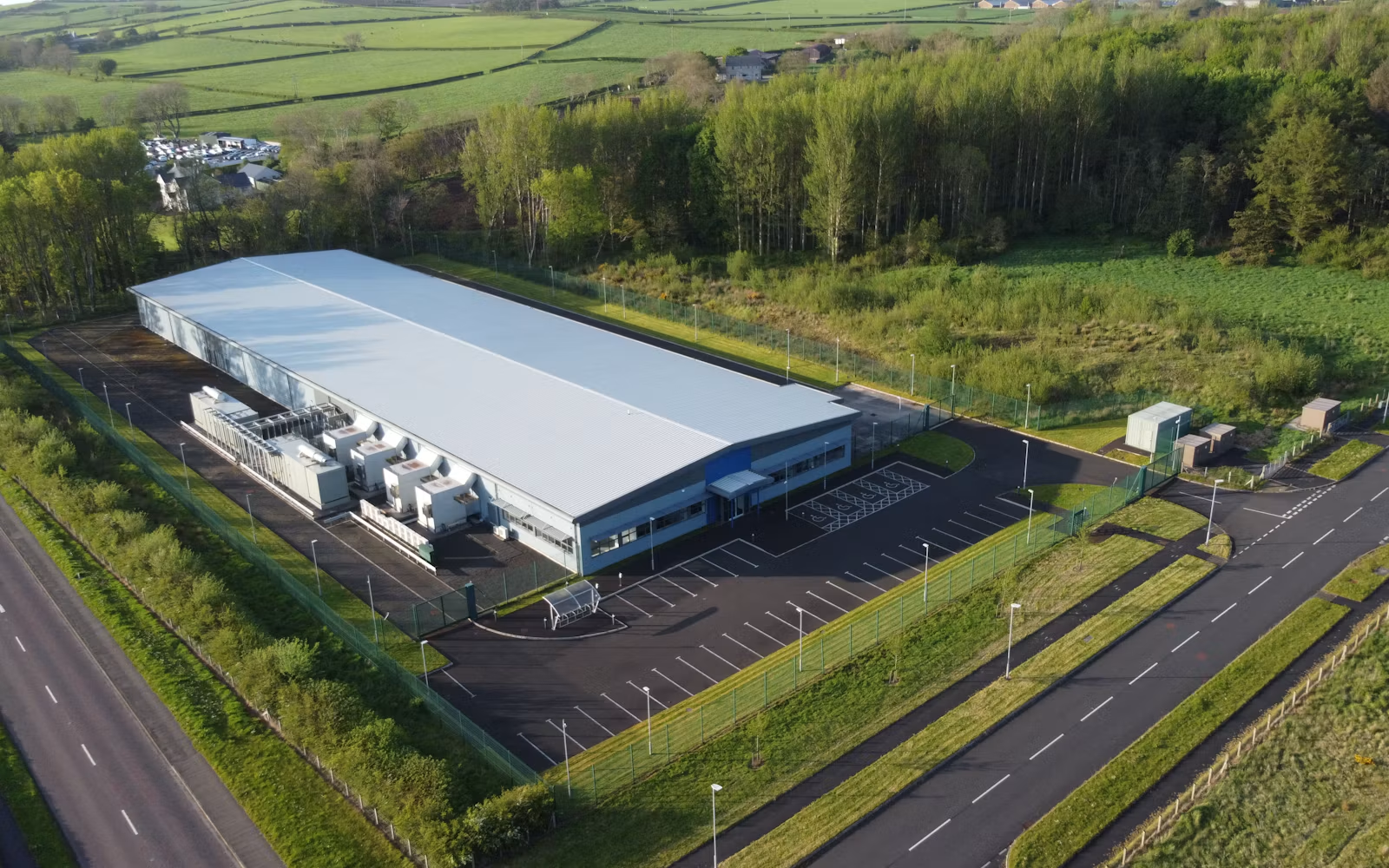
On March 14, 2006, a short notice appeared on Amazon's What's New page. It ran to a single paragraph, with no fanfare, and its opening line described the new service as "storage for the Internet." That service was Amazon S3. When it switched on, it offered about a petabyte of capacity spread over some 400 storage nodes in 15 racks, across three data centers.
Twenty years later, S3 holds more than 500 trillion objects and answers more than 200 million requests every second. The price of storing a gigabyte has fallen by about 85 percent since launch. And the code developers wrote for S3 in 2006 still works unchanged, even though nearly everything underneath it has been rebuilt many times over.
S3 also set the pattern for everything Amazon Web Services became: a simple part, paid for as you use it, that combines with other simple parts into something very large. AWS now offers more than 240 of those parts. This is a walk through the catalog.
The idea was building blocks#
In Amazon's own telling of S3's origin, the team wrote down its design principles early. They assumed hardware would fail all the time and built the system to stay sound anyway. Above all, they set out to make a building block for services nobody had imagined yet, rather than one product that tried to do everything.
Compute came next. On August 25, 2006, Amazon opened a limited beta of EC2, Elastic Compute Cloud: virtual servers, meaning software-defined computers carved out of real machines, rented by the hour. There was one size of server in one Region on the US East Coast. EC2 now offers more than 1,200 instance types, tuned for general work, heavy computation, huge memory, fast storage, graphics and AI.
The blocks kept arriving. Elastic Block Store gave servers persistent disks in 2008, and Virtual Private Cloud gave customers their own private networks in 2009. DynamoDB, a database built for enormous scale, arrived in 2012. In November 2014 came AWS Lambda, which helped make "serverless" part of every developer's vocabulary: you upload a function, and AWS runs it only when something happens, such as a file landing in S3 or a customer clicking "buy." By Lambda's tenth birthday, more than 1.5 million customers were using it every month.
A map drawn in zones#
AWS describes its geography in Regions and Availability Zones. A Region is a cluster of data centers in one part of the world. Each Region contains at least three Availability Zones, independent and physically separate sites, so an application spread across them can keep running if one has a bad day. The AWS Cloud now spans 39 Regions and 124 Availability Zones, with two more Regions, in Saudi Arabia and Chile, already announced.
Those Regions are stitched together by nearly 20 million kilometers of land and undersea fiber. At the outer edge, CloudFront, AWS's content delivery network, keeps copies of websites, video and app data in more than 750 points of presence, so they reach people from somewhere nearby. Local Zones put compute close to big population centers for latency-sensitive work. Wavelength brings AWS into 5G mobile networks. And if you need the cloud inside your own building, Outposts brings fully managed AWS hardware to your own data center or other on-premises site.
Compute in every shape#
The most striking thing about EC2 today is that much of it runs on silicon Amazon designs itself. Graviton processors, introduced in 2018, are Arm-based chips built for cloud workloads. The newest, Graviton5, packs 192 cores. More than 90,000 customers have used Graviton, and during Prime Day 2026 it powered up to 49 percent of the EC2 compute Amazon.com itself used.
Underneath sits the Nitro System, introduced in 2017 and now in its sixth generation. Nitro moves networking, storage and security onto dedicated hardware, leaving practically all of a server's resources to the customer. In 2026 AWS added the Nitro Isolation Engine, which applies formal verification, a mathematical proof of correctness, to the hypervisor that keeps customers apart.
Then there are the delightfully specific options. You can rent an actual Mac in the cloud, including M4 Max and M3 Ultra machines, to build and test apps for Apple devices. You can run containers without managing servers on Fargate, choreograph multi-step processes visually with Step Functions, and wire apps together with events using EventBridge. The scale of all this is easiest to grasp at peak: during Prime Day 2026, Lambda handled more than 2.3 trillion invocations a day.
Places to put data#
S3 is designed for eleven nines of durability, 99.999999999 percent, a way of saying that losing an object is meant to be vanishingly rare. It has also kept learning new tricks. S3 Tables offers fully managed Apache Iceberg tables, an open format that lets many analytics tools work on the same data. S3 Vectors, generally available since December 2025, stores vectors, the long lists of numbers AI systems use to represent meaning, at up to two billion per index, which makes it a natural home for semantic search.
The database shelf is just as deep. Aurora is a relational database compatible with PostgreSQL and MySQL, and its newest member, Aurora DSQL, became generally available in 2025 as a distributed SQL database. DynamoDB is the one built for extremes: over the four days of Prime Day 2026 it processed more than 59 trillion requests, peaking at 192 million requests per second, while keeping response times in single-digit milliseconds. For analysis there is Redshift for data warehousing, Athena for querying files in S3 with plain SQL, and Glue for moving and preparing data between them.
The AI aisle#
Amazon Bedrock is AWS's platform for building generative AI applications and agents. It offers hundreds of foundation models from leading AI companies through one service, and more than 100,000 organizations use it. Bedrock AgentCore, generally available since October 2025, handles the hard parts of putting AI agents into production at scale, and it has since added quality evaluations and policy controls for keeping agents in bounds.
Amazon also builds its own models. The Nova family includes models for text, images and speech; Nova 2.5 Sonic, released this month, is a speech-to-speech model for voice agents, and Nova Act is built for agents that work through web browsers. To train and run models like these, AWS designs its own AI chips, called Trainium, and its Trainium3 UltraServers link up to 144 of them. SageMaker brings data, analytics and AI together in one place, and Kiro, built and operated by AWS, is an agentic coding environment that turns prompts into executable specifications before it writes the code.
The far corners of the catalog#
Some of the most memorable AWS services are the least expected. AWS Ground Station rents out time on a global network of satellite antennas. If you operate a satellite, you can talk to it several times per orbit and pay only for the minutes of antenna access you use, instead of building ground stations of your own.
Amazon Braket puts quantum computers a sign-in away. It offers machines built on three different approaches, superconducting qubits, trapped ions and neutral atoms, from several hardware makers, along with simulators to test circuits before running them on the real thing.
Deadline Cloud sets up a render farm in minutes for animation and visual effects work. GameLift Streams streams games at high frame rates to players around the world. Amazon Connect runs AI-assisted contact centers. Woven through everything is a deep security toolkit, including IAM for deciding who can do what, GuardDuty for spotting threats and Shield for absorbing DDoS attacks, the floods of junk traffic that try to knock services offline.
Why the catalog matters#
A catalog this large can look intimidating, but its real gift is that you only ever use the parts you need. New customers can start with up to $200 in credits, and more than 30 services are always free within monthly limits. The same building blocks that carry Prime Day are available to a two-person startup on day one.
That range means a platform can be built and shipped without anyone first building a data center. It is a long way from a single paragraph on a What's New page in 2006. The global infrastructure map shows how far.
 Pruébalo